Three Names
I just found out that Dorothy Allison died. Literally a year to the day that she passed. November 6, 2024.
I started to outline the first section of the book I want to write, titled The Stray. The Orphan. The Widow. – and I went to look up a quote from Bastard Out of Carolina, when the lead character Bone says, “I fell into shame like a suicide throws herself into a river.”
I happened to look at Allison’s Wikipedia page and scanned down to her awards section. Below it said “Personal Life and Death.” Death? The word gave me pause. Probably because I’ve been thinking a lot about death the past five months. Holly’s death. My own mortality. How hard it is to live life sometimes. But especially how hard it is to unalive someone and navigate what I call "The Business of Death."
The administration of closing accounts. The endless calling, getting transferred, and explaining the same information over and over to six different people. Being told they can’t talk to me. Her dental office, where she’d gone for decades, not even acting like they cared when I told them she wouldn’t be making it to her appointment.
But a year ago, I missed the massive news of the passing of one of the rawest, fiercest novelists to have ever lived, at least in my opinion. I felt heartsick and sad that someone who wrote a book that powerful left, and I didn’t even know about it or read an obituary. What the heck was I doing back then? I don’t remember. Fretting about the election, maybe? Helping take care of Holly? She was starting to get really sick then. There’s no excuse. I’m sorry, Dorothy!
Here's the thing: when I read Bastard Out of Carolina, I felt like I was seeing a lot of my life jump off the page. White trash kid living in rural America wandering around like a stray.
I wasn’t quite illegitimate like Ruth Anne “Bone” Boatright. Although I only heard much later in life that my parents went to a key exchange party in the 70s (literally swingers), not long before I was born. I couldn’t help but wonder if maybe my dad was someone besides the father who decided to abandon me after my parents divorced.
But like Bone, I felt like a stray growing up. Now I think about it as being raised a bit like a sea turtle. My mom had me on a beach, pointed at the ocean, and said, “Good luck, kid!” I never knew it was strange to be a latch-key kid, basically parentless for about 17 hours a day, until I went over to friends’ houses and saw their parents around, asking them how their day was. Parents cared about how their day was? Then they’d ask me how my day was! They gave me cookies and had me stay for dinner. The little stray that Alison, Caroline, and Stephanie brought home. The little stray, who thankfully had a German teacher who cared about her enough for five years, that she probably saved the little stray’s life.
In fact, Stray is literally the title of the first section of the book. I came up with it in a conversation with my friend, Pilar.
We were sitting around a coffee shop on a road trip, waiting for her electric car to charge. We were on our way home from seeing Neko Case’s latest tour at the incredible Pabst Theater in Milwaukee. What a show! I think I converted Pilar into a Neko fan. Well, Neko converted Pilar into a Neko fan. But after the concert, I got to telling Pilar about Neko’s memoir The Harder I Fight The More I Love You — about how violent and neglectful her childhood experience was, and how I felt a kinship with it. Neko was also a stray in a way, I think. I think she even writes in it that she was feral.
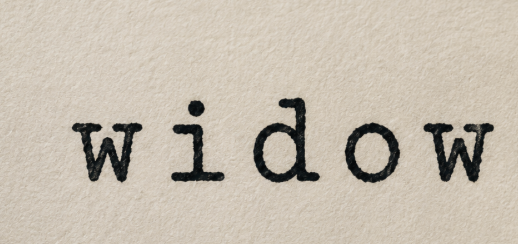
A while later, after I’d been talking to Pilar about Holly for the 74th time, I said, “Let me know if you’re sick of me talking about Holly.” She said, “Oh yeah, I’m so sick of you talking about your partner who just died.” Then she said something about me being a widow.
Holy shit. I’m a widow. The word hit me heavy in my chest as hard as the time the softball that my friend, Marcia, hit back at me when we were playing a pick-up game on the beautiful lawn shaded by giant eucalyptus trees outside Orchard Meadow. It literally knocked me down. Like my feet went up, I bet I was in an L shape, and I landed so hard that I hit the ground, and a loud thunk happened like in Looney Tunes. All my Mills College dormmates ran to make sure I was ok. I was younger then, so I was okay. LOL. But how my sternum didn’t break, I’ll never know.
Back when I was a stray kid wandering around or sitting in front of R-rated cable television for hours a day in Bixby, Oklahoma, I never imagined even being loved by someone enough to have a partner, much less imagine sitting with them as they took their last breath. Widows are old, aren’t they? 50-something isn’t really that old. In the grand scheme of life these days, it’s like middle-aged. But now here I was a widow, which is also a kind of a stray.
A widow as in a single word or short line of text in a paragraph that’s separated from the rest. As an editor, I was told to look for those kinds of widows, fix them, and connect them to their friends on the next line.
But I don’t think I am a widow that can be fixed.
I’m more of a kind of poetry widow. At least when I write poetry, I break up lines of text with certain words on lines separated from others for effect. I intentionally make editorial widows.
I learned this from reading a lot of Anne Sexton, lucille clifton, Audre Lorde, and Mary Oliver. Superb poetry widows, all.
For example, from Lorde’s Who Said It Was Simple:
There are so many roots to the tree of anger
that sometimes the branches shatter
before they bear.
Or Sexton’s, Her Kind:
“I have gone out, a possessed witch,
haunting the black air, braver at night;
dreaming evil, I have done my hitch
over the plain houses, light by light:
lonely thing, twelve-fingered, out of mind.
A woman like that is not a woman, quite.
I have been her kind.”
That still gives me shivers.
I am a widow
I am a stray.
Between being a stray and a widow, I was an orphan.
My mom died when I was 25. The first impactful death of my lifetime (not the last). I always said that losing her – even though we were not close – felt like I lost where I had come from. I mean, it's true – we all come from our mother’s womb, physically at least. Before that, we come from an egg and a sperm, though the person who donates or provides the sperm doesn’t have to stick around. Mine didn’t.
A young animal separated from its parent is an orphan. A child whose parents are dead is an orphan.
So an orphan is also a stray.
So yes, the book section titles lined up neatly in that conversation with Pilar.
The stray. The orphan. The widow. My friend, Lisa, a brilliant editor who read this draft, said this was reminiscent of Elizabeth Gilbert’s, Eat, Pray, Love. “BUT instead of verbs, you have nouns,” she noted the way a brilliant copy editor would pick up on, but I did not.
A verb expresses existence, action, or occurrence, while a noun describes a person, place, thing, or quality.
But a stray (noun) can also stray (verb) and could have gone astray (adjective). All the strays that I know and the stray that I was and am are often thoughtful and elusive shapeshifters. We’ve had to be to survive while astray.
I keep thinking how my life keeps bringing me back here – to this straying kind of aloneness. “My heart broke all over again,” Bone noted in Bastard Out of Carolina.
And some nights I feel like Bone’s mama. “No one knew she cried in the night for Lyle and her lost happiness, that under that biscuit crust exterior she was all butter, grief, and hunger,” Allison writes.
So, as I outline this book, I can easily write the first two sections – about being a stray and an orphan. I can see the similar themes in my mind and how I found my way through tough times as a stray and an orphan.
But the section on being a widow has yet to be written. Right now, it’s a familiar feeling.
Dazed, wandering, wondering. Fear, awe, looking for connection. Shame. Exhaustion. Directionless, a different kind of straying. Figuring out how to be alone and finding purpose again now that the purpose I had was creating a life with my partner, and then taking care of her while she was choked out by cancer and the chemical corporations who poisoned her via Broomfield County Parks and Rec, who asked her to choke out weeds (also a kind of stray) for a whole summer.
I’m also a stray writer, thanks to companies that made artificial intelligence by stealing the brilliant words and minds of creatives, and have used it to choke us out of jobs.
But AI doesn’t have any stories of its own – and this is my story to tell. Does anyone care what another white middle-aged woman has to say? Lisa pops into my mind again: “Yes.”
So here I am, writing a story that may never make it anywhere but on these pages. But it’s mine, and that’s something that no one can take away from this stray orphan.
I suspect, no hope. Ha. That’s a funny way to say it, because I always told Holly to “stop hoping for things.” She loved that! It made her laugh, and she told it to her friend, Estelle. It may have even made it to the quote of the day at some point. (Holly spent years documenting memorable things that people she knew said or her favorite quotes from movies into notebooks and then onto Facebook).
I intend, yes, that’s a better word. To write my story as a widow based on what I learned from my stray and orphan selves (and my grief therapy “episodes” with my wonderful counselor and grief guide, Korie). Those early versions of me are wise and strong and open to what lies ahead, even if it is sometimes scary and sad.